

Click below to explore more aspects of the program:
Browse Sessions
Showing results across all blocks. Click a tab to go back to browsing one block at a time.
School Management · Leadership & Governance
Leading an Episcopal school today requires wise stewardship and sound judgment amid increasing legal complexity. Join attorney Kristin Smith for a focused session for heads, board chairs, and senior leaders exploring key legal trends affecting Episcopal schools, with practical guidance to lead with confidence, integrity, and clarity.
 Kristin L. Smith, Esq., Partner and Co-chair, K-12 Institutions, Fisher Phillips (Houston, TX)
Service & Service Learning
Explore All Saints’ Episcopal School’s vertically-aligned Service Learning program (MS/US). Our model values learning as much as serving through curated pre-service lessons and post-service reflections. Learn how we scaffold research, empathy, and personalization as students progress, moving them from direct service to a deep understanding of community needs.
Episcopal Identity · School Life & Culture · Curriculum & Teaching · School Management
Traditional evaluation models tend to be episodic, compliance-oriented, and deficit-focused; they do not fully honor teaching as an intellectual, relational, and vocational practice. Campbell Hall’s academic philosophy calls us to joyful, purposeful learning; deep relationships; courageous conversation; and reflective practice.
Episcopal Identity · School Life & Culture · Community & Belonging
This presentation describes L.O.V.E., a parent group exploring Episcopal identity, diversity, and belonging. Now in its second year, the group builds community using Bishop Curry’s “love as action” framework. Attendees will learn how the group empowers parents through activities and reflection, reinforcing core values both at school and in their lives. Ideal for mission-aligned parent engagement.
Episcopal Identity · Equity & Justice · School Life & Culture · Curriculum & Teaching · Community & Belonging · Leadership & Governance · Service & Service Learning
This session explores how art and documentation in Reggio Emilia–inspired classrooms create space for stillness, reflection, and meaning-making. Through intentional art experiences and reflective documentation, educators are invited to pause, observe, and honor children as capable learners, making learning visible while nurturing creativity, connection, and care.
Episcopal Identity · Chapel & Worship
Over the past several years, the US/MS chapel program at my school has moved from virtually no student leadership in chapel to a robust, formal chapel leadership program. This workshop/discussion would give an overview of how I launched and built up that program and examine how student leadership has changed/improved chapel culture and strengthened Episcopal Identity.
Episcopal Identity
What word comes to mind when you think children’s spirituality? Join our conversation about how Lutheran theology shapes our understanding of children’s spirituality and grow your vocabulary and faith practices.
Episcopal Identity
How can schools define and renew Episcopal identity to deepen belonging and strengthen culture? This workshop explores process, hurdles, and the value identity work brings. We will offer strategies to move beyond abstract language, name what Episcopal identity looks and feels like in your community, and authentically engage all stakeholders in living out Episcopal values.
School Management · Leadership & Governance
A candid dialogue between St. Stephen’s Head of School Chris Gunnin and Director of Advancement April Speck-Ewer discussing the school’s $85 million campaign and the strategies they’ve used to clarify roles, build mutual trust, and maximize giving.
Episcopal Identity · Equity & Justice · Service & Service Learning
As Haiti suffers, hope is alive in the 250+ rural Episcopal Schools which provide an education, stability, and even emergency shelter. U.S. Episcopal Schools have maintained their partnerships, and a few new ones have even emerged. Join a dialogue about co-partnering with existing partnerships, ways to stay connected, best practices in partnerships, and hopes for the future.
Curriculum & Teaching
As generative AI rapidly reshapes the educational landscape, school leaders face the challenge of harnessing its potential while remaining anchored in mission, relationships, and academic integrity. This session shares our school’s journey as we explore the challenges and opportunities of AI within our teaching and learning practices and how we balance innovation with our Episcopal identity.
Episcopal Identity · Equity & Justice · Community & Belonging · Chapel & Worship · Service & Service Learning
This workshop explores how educators can help students cultivate a sense of greater purpose. Participants will learn what “greater purpose” is, why it matters for adolescents today, and how schools can — through chapel, DEIJ programming, service & social innovation, and the college counseling process — support students as they discern and discover their purpose in life.
School Management · Leadership & Governance
Most board governance sessions focus on board training and board leadership. Often overlooked in these presentations is the Head’s role in leading the board. This session will explore how heads can establish strong relationships with board chairs/members, collaboratively work to ensure board professional development, and guide the board to work more effectively.
Episcopal Identity · Equity & Justice · School Life & Culture · Community & Belonging · Chapel & Worship
How do schools support students who have violated community norms (identity-based harassment, cheating, bullying, etc.) after disciplinary action? While many institutions have strong support systems for those harmed, fewer have structured pathways for the offending student’s reentry into the community. This session explores a redemptive approach that moves beyond punishment toward transformation.
 The Rev. Palmer B. Kennedy, Head Chaplain, Porter-Gaud School (Charleston, SC)
 Yerko Sepúlveda, Ph.D., Head of Community Engagement and Wellness, Porter-Gaud School (Charleston, SC)
Episcopal Identity · Equity & Justice · School Management · Leadership & Governance
Aligned with “Be still, and know that I am God” (Psalm 46:11), this panel explores sustainability practices in EUSA schools. Leaders will share strategies for funding, governance, staffing, partnerships, and Episcopal identity in daily practice—helping schools lead with calm, clarity, and mission integrity.
Episcopal Identity · Chapel & Worship · School Life & Culture
This session will convene presentation and discussion of ‘Iolani School’s New Student Center Tea Room as ‘In-School Retreat Center.’ Programmed and unprogrammed, the low-stimulus space, by a Zen garden, will offer resources for tea, rest, prayer, meditation, emotional regulation, mindfulness, and spiritual formation.
Equity & Justice · School Life & Culture · Community & Belonging · Service & Service Learning
Our schools often live in bubbles, doing amazing work to promote gratitude, service, wellness, sustainability, equality, and inclusion among our students and community, but we rarely have the opportunity to share this work outside our community. Kent has created a Community Life Summit to allow student leaders and faculty from schools to come together to share our work and vision with one another.
All of the Above
This workshop explores Godly Play as a model for cultivating deep wonder. Drawing on Anders Schinkel’s work, it distinguishes between active wonder and deep wonder, identifying the value of deep wonder for education of the whole student. We will explore how Godly Play practices create conditions for deep wonder and how these can be adapted to classroom settings with children and youth.
Episcopal Identity · Chapel & Worship · Curriculum & Teaching · Community & Belonging
Participants are invited to experience an instructed Eucharist through examples and reflection. It demonstrates how age-appropriate teaching, student participation, meaningful roles, and worship practices are intentionally woven together to draw on knowledge obtained in earlier years to nurture and support students’ spiritual formation.
Equity & Justice · School Life & Culture · School Management · Leadership & Governance
We added grades 1-3 to our 65+ year-old pre-school program as a novel experiment in Baltimore: comprehensive early childhood education built from the ground up. We listened broadly and determined that we would only seek to grow if every constituency could benefit. We will present the story of our success, its challenges, growing pains, and surprises.
School Life & Culture · Curriculum & Teaching · Community & Belonging · Service & Service Learning
In this workshop, participants learn how students can become future-shapers—identifying real human needs, and using design thinking to meaningfully develop solutions with empathy and creativity. This workshop shows how we can empower students not just to imagine a better future, but to begin building it today, with empathy as their compass and creativity as their engine.
School Life & Culture · School Management · Leadership & Governance
Schools spend significant time creating strategic plans—then the urgent overtakes the strategic. This session focuses on how OES operationalized its plan through a distributed leadership framework. Learn how a cadence of beginning, mid, and end-of-year updates tied to outcomes, metrics, and action steps keeps stakeholders informed and drives real results.
School Life & Culture · School Management · Community & Belonging · Leadership & Governance
Presented by two experienced female Heads of School, it is rooted in a shared calling to leadership in Episcopal education. Designed for aspiring/current female Heads, plus mentors, it provides guidance and perspective, naming both the challenges of the role and the joy of faithful leadership. The presentation seeks to prepare and inspire future women leaders in Episcopal schools.
School Life & Culture · Curriculum & Teaching · Community & Belonging
Learn how to use picture books in early elementary classrooms to facilitate SEL discussions. The workshop will highlight integration of verbiage around emotions, intrapersonal relationships, and perseverance. Facilitators will demonstrate how to frame discussions, walk students through progressions of emotions and regulation techniques, and incorporate reflections into practices in the classroom.
Equity & Justice · Curriculum & Teaching · Community & Belonging
When human development concepts are introduced early and revisited with increasing depth, students develop the critical thinking skills and self-understanding necessary to approach adolescence with confidence rather than confusion. This session will explore the building blocks of a comprehensive K–6 HD program and offer practical strategies for implementation and securing school-wide support.
School Life & Culture · Leadership & Governance
Turning the power pyramid upside down. This session invites educators to explore what it means to be a servant leader and how this approach reshapes school culture. Participants will examine how leadership grounded in service strengthens relationships, supports teachers and students, and sustains the leader as well.
Episcopal Identity · School Life & Culture
This panel invites accomplished heads of school to reflect candidly on what years of leadership have taught them — about sustaining Episcopal identity, navigating change, building school culture, and mentoring the next generation. A moderated conversation offers practical wisdom for heads at every career stage.
 The Rev. David A. Madison, D.Min., Executive Director, National Association of Episcopal Schools (New York, NY)
Episcopal Identity · All of the Above
Episcopal Identity in the Business Office? At Carpool? In College Counseling? Yes! School leaders need to be able to explain what it means to be an Episcopal school with more than “We go to Chapel.” SAES staff will lead a discussion of how to think about, expand, and articulate your school’s Episcopal Identity throughout all aspects of your school’s programs and operations.
Equity & Justice · School Life & Culture · School Management · Community & Belonging
How does your financial aid process sync with your mission and your school’s identity as an Episcopal school? In this session we’ll discuss recent trends in financial aid and with RJ Johnsen, Director of Enrollment Management at St. Albans School (DC), delve into how financial aid methodology can help build a community that aligns with your values.
Episcopal Identity · Chapel & Worship · Equity & Justice · School Life & Culture · Service & Service Learning
At OES, we have been working to de-silo the offices of Chaplaincy, Community Engagement, and Equity & Inclusion, affectionately referred to as the OES Justice League. Together, these offices support students in putting LOVE into action as we live into the call to educate the whole person to become compassionate and engaged citizens, through what we say, what we learn, and what we do.
School Life & Culture
One year into the Wisdom Circle — a joint NAES/Virginia Theological Seminary initiative — participants share early lessons on partnering with congregations to support faith formation for children ages 0–6. Hear practical takeaways, honest reflections, and a first look at resources developed through the project, plus ideas for strengthening church–school collaboration at your own school.
Chapel & Worship
Our students lead worship on all three campuses. At the middle school and upper school campus, over 150 upper school students serve on student Vestry, planning and leading the chapels. We will look at how the chaplains empower and equip our students to be the spiritual leaders of their peers while crafting creative and interactive chapels, staying true to scripture and traditions of the church.
Episcopal Identity · Chapel & Worship
School chaplaincy searches are challenging, given the limited number of candidates and the needs of Episcopal schools. What is important to students completing their seminary education, and what might draw them to school opportunities? Two people familiar with these perspectives will share their insights.
Episcopal Identity · Chapel & Worship · Study of Religion · School Life & Culture · Community & Belonging
In our changing religious landscape, it is challenging to articulate the value of an Episcopal education. Drawing on leadership experiences in an increasingly secular environment, leaders of the Episcopal School of Nashville will share how they cast a vision for Episcopal education that speaks to faculty, staff, board and families and integrates Episcopal Identity across the life of the school.
Episcopal Identity · Leadership & Governance
What does it mean to share campus—and mission—between parish church and Episcopal school? A Head of School and Rector dialogue about how they grew a partnership that led to a ground lease and shared-use agreement, and how the process strengthened relationships between church and school. The session models the dialogue it encourages—honest, respectful, and rooted in Episcopal identity.
School Life & Culture · School Management · Leadership & Governance
The power of alternative investments derives from their versatility to offer innovative strategies that align with sophisticated investors’ financial goals. At Morgan Stanley, our global resources enable us to offer investment opportunities that may help Member Schools enhance returns, reduce volatility and generate income through a curated platform of alternative investments.
Equity & Justice · School Life & Culture · Curriculum & Teaching · Community & Belonging
This session shares findings from a mixed-methods study conducted in an Episcopal independent school exploring how extracurricular participation relates to academic outcomes and student well-being. Participants will gain insight into how ECAs support growth, time management, and belonging—even when academic indicators remain unchanged.
Curriculum & Teaching
Teaching religion and faith formation can be overwhelming, even scary, without religious training. How do you teach something if you don’t have mastery of the subject matter? In this workshop we will discuss:
- Religion and faith, same or different
- Age-appropriate lessons
- Choosing the right Bible and curriculum
And we’ll share stories of successes, nightmares, and likely some laughter!
Episcopal Identity · Leadership & Governance
What does leadership look like in the daily life of an Episcopal school? Join Brandon Jacobs, the leader of NAES’s newest program, the Leadership Certificate Program Manager, as he sits down for an in-depth conversation with three program participants, Rev. Virginia Buckles, Associate Chaplain, St. George’s School, RI, Chris Doyle, Executive Director, Boys Home of Virginia, VA, and Leigh Ann Brown, Faith Studies Teacher, Good Shepherd Episcopal School, TX. During this candid conversation, they will speak about how the four guiding principles play out within their roles and their schools. Panelists will share how “Nurturing Community” has shaped the way they build covenantal rather than transactional relationships, how “Practicing Faith” lives out as a verb in their work, how “Deepening Wisdom” moves their teaching and leading beyond knowledge alone, and how “Honoring Dignity” guides them through tension and difference. Speaking from a range of roles and school settings, they will offer honest stories of what has worked, what has challenged them, and how school leaders can embody these principles in their schools. Attendees will leave with practical ways to bring these principles into their own leadership and communities, whatever their position.
School Life & Culture
This panel discussion will cover a wide range of topics concerning early childhood education within Episcopal schools, exploring how educators can nurture young learners’ spiritual, social, and academic growth. Panelists will share insights and practical strategies for educators and school leaders working with early childhood programs.
 Elizabeth J. Ryan, Director, St. Paul’s Episcopal Day School (Delray Beach, FL)
 Christy Poindexter, Director, The Early Childhood Education Program at Trinity Cathedral (Little Rock, AR)
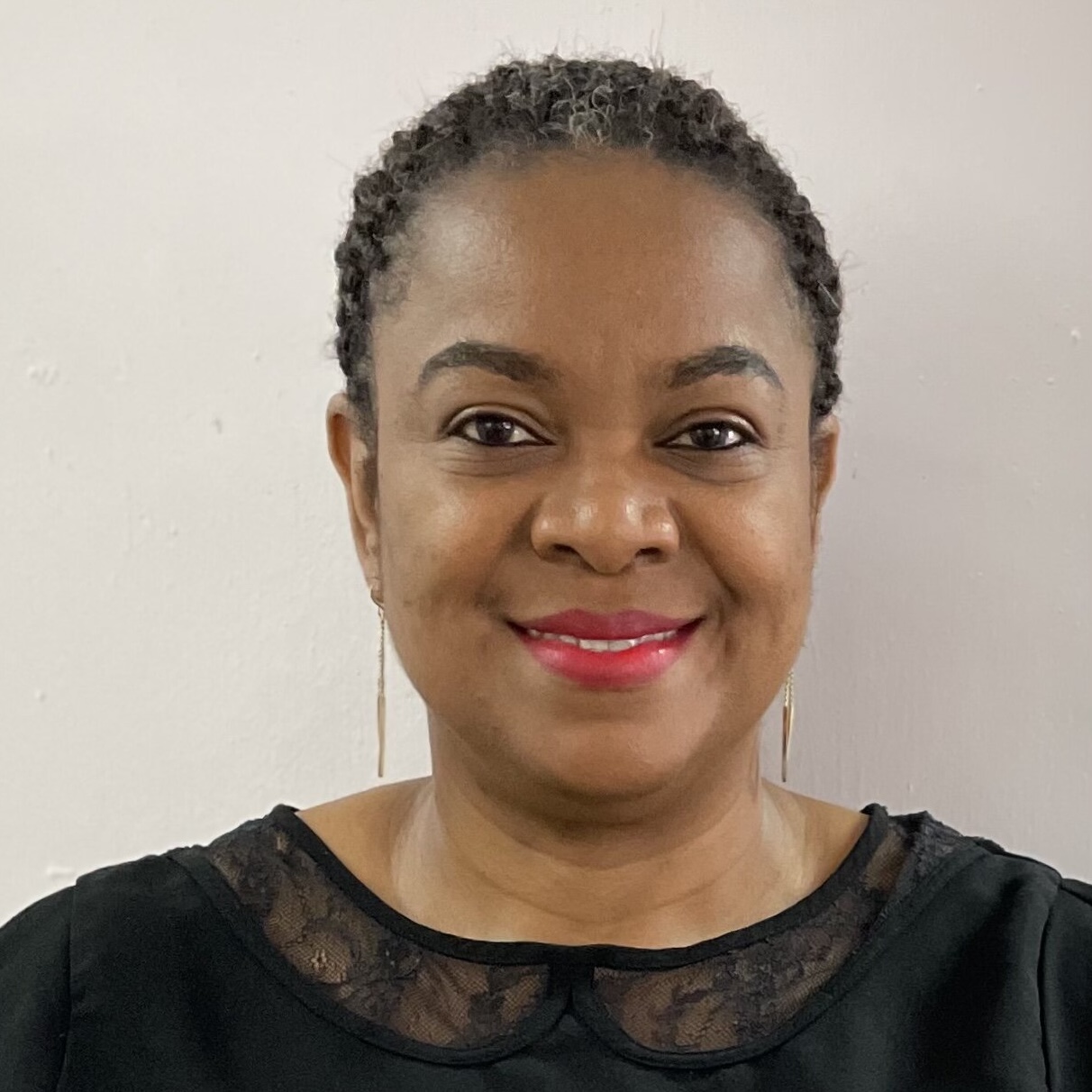 Jennifer Allen, Director, The Jack and Jill School (New York, NY)
 Kami Allen, Director, St. John’s Day School (Alamogordo, NM)
Episcopal Identity · Equity & Justice · School Life & Culture · School Management · Community & Belonging · Chapel & Worship · Service & Service Learning
In the spirit of the newly formed Anglican Communion Schools Network, this workshop draws on educational settings in both the United States and South Africa to explore Episcopal identity as it relates to the mission of the Church. Our premise is that the integrity of Episcopal identity includes concretely embodying the Church’s mission to contribute to a more just society.
Leadership & Governance
This dynamic workshop is designed to explore the Governance Health Index—a framework that defines six core competencies essential for effective, mission-aligned governance in today’s evolving educational landscape. Together, we’ll examine each competency, reflect on board and leadership roles, and use a practical self-assessment tool to evaluate your school’s current governance health.
Equity & Justice · School Life & Culture · Curriculum & Teaching · Community & Belonging · Chapel & Worship · Leadership & Governance
In an age of national crisis, polarization, ICE raids, and misinformation, educators and chaplains are increasingly called to serve as first responders to conflict and fear in school communities. This workshop introduces CPR—Curious, Probe, Redirect, a de-escalation practice developed by A Long Talk—as a spiritually grounded methodology for cultivating belonging.
Episcopal Identity · School Life & Culture · School Management · Community & Belonging · Chapel & Worship
Episcopal Schools are faced with the challenge of clearly defining who they are. This challenge is especially present in markets with both evangelical and secular school options. However, if defined clearly and accurately, our schools’ Episcopal identities can be particularly winsome, even to prospective families and employees from outside of the Episcopal tradition.
Episcopal Identity · Chapel & Worship · School Life & Culture
The rhythm of worship in an Episcopal school offers an invaluable opportunity for young people to see their essential role in sacred community and make Episcopal liturgy meaningful to them. How can we offer age-appropriate experiences for students to take ownership of their worship? How can we support their leadership in a chapel context? Where do we offer choice and creative space?
Episcopal Identity · Chapel & Worship · School Life & Culture · Community & Belonging · Service & Service Learning
Raising a service dog in training is a transformative experience for a school community! Learn how students contribute to healing and hope while also growing empathy, resilience, and respect — and enjoying the gift of unconditional love in a welcoming wag and a soft paw. Through storytelling, reflections, and examples, we hope to inspire other schools to consider joining this much-needed work.
Episcopal Identity · Equity & Justice · School Life & Culture · Curriculum & Teaching · Community & Belonging · Service & Service Learning
After the Los Angeles fires forced St. Matthew’s Parish School to relocate, we seized the challenge as an opportunity. Discover how our 7th grade service course was renewed and revitalized, harnessing the unique strengths and needs of our new community to create impactful, student-driven service learning experiences that built resilience and connection.
Episcopal Identity · School Life & Culture · Curriculum & Teaching
In this workshop, we will reflect on the 1986 Mt. Hood tragedy at Oregon Episcopal School and consider how a community moved through trauma with lament, learning, and love. Through story and case study, we will explore trauma-informed leadership, thoughtful risk management, and the enduring power of experiential education to shape resilient communities.
School Life & Culture · School Management · Leadership & Governance
The biggest challenge admissions professionals face in recruiting and retaining families is teacher culture. Schools are businesses and operate in an ever increasingly and challenging independent school landscape. It is possible to shift the mindset of teacher culture to one of shared ownership for enrollment, engagement in the work of admissions, and embracing a business approach to their work.
School Life & Culture · Curriculum & Teaching
“Be Still and Know” inspires and informs a fresh, vibrant approach to tech balance in early childhood. Let’s share creative ways to help young learners pause, play, wonder, and stay present. Discover simple routines, unplugged challenges, and tech-light practices that spark focus, joy, and healthier digital habits for students and educators.
Episcopal Identity · Curriculum & Teaching · Service & Service Learning
Service learning at All Saints is developmentally appropriate and grade-level specific. Each grade explores a community need, building understanding, empathy, and responsibility over time. Students first learn about an issue through lessons and discussion, then take meaningful, age-appropriate action grounded in purpose and compassion.
Episcopal Identity · Study of Religion · Equity & Justice · School Life & Culture · Curriculum & Teaching · Community & Belonging · Service & Service Learning
Theology as lived experience, not abstract doctrine. Students trace a powerful arc: from Queen Emma’s legacy of compassionate leadership, to José Andrés feeding millions, to their own community partners. Through Tutu’s “God Has a Dream” and Matthew 25’s radical call, they discover what it means to serve “the least of these”—and meet Christ in the process.
Equity & Justice · Curriculum & Teaching
In this presentation, we will share how we at Breck School created an instructional framework to guide improvement. The three domains — cultural awareness, intentional environments, and deeper learning — are deeply rooted in our Episcopal Identity. We will share how the framework is integrated into teacher inquiry and coaching, and how attendees might adapt it to meet their own school’s context.
 Dr. Julie Kallio, Lead Researcher, Breck School (Golden Valley, MN)
 Dr. Chéleah Googe, Director of Leadership and Equity, Breck School (Golden Valley, MN)
Episcopal Identity · Equity & Justice · Curriculum & Teaching · Chapel & Worship · Service & Service Learning
At Canterbury School, our commitment to our Episcopal Identity has transformed our understanding of service. Our Servant Leadership program for grades 6-8 structures such deep student reflection on off-site service learning that students are equipped with the tools and self knowledge to become servant leaders not just in the community but in classes, in relationships and in their futures.
Equity & Justice · School Life & Culture · Community & Belonging · Leadership & Governance
Rooted in Episcopal values of accountability and grace, Trinity School leaders share how six years of bias incident data shapes policies and culture. Learn to define and track bias incidents, use data for institutional self-reflection, and strengthen your school’s witness to justice and beloved community.
School Life & Culture · Community & Belonging · Leadership & Governance
This workshop will explore low-cost strategies that help childcare centers and schools increase community recognition while authentically responding to local needs. Participants will examine ways to build relationships with families, congregations, schools and local organizations. Attendees will leave with actionable ideas to implement immediately to strengthen enrollment and community impact.
School Life & Culture · Community & Belonging · Chapel & Worship
Join Russell, a veteran Level 1 pediatric trauma chaplain, for a deep dive into the spiritual heart of school ministry. Drawing on 20 years of stories, he explores the Ministry of Presence, the Mystery of Suffering, the Hope of the Paschal Mystery, and Blueprints for Self-Care. Learn to “be still” amidst the noise and rely on God as you lead your community toward the promise of the Resurrection.
Episcopal Identity · Study of Religion · Curriculum & Teaching · Community & Belonging
Attention is one of our scarcest and most valuable resources. This session will walk through how to envision and implement a religion academic curriculum that embodies school mission, stirs imagination, trains attention, and centers relationship. We will explore curriculum storyboarding as an effective process for big-picture thinking, backwards design, consensus building, and marketing to families.
Episcopal Identity · Equity & Justice · School Life & Culture · Curriculum & Teaching · School Management · Community & Belonging · Leadership & Governance · Service & Service Learning
Episcopal schools are called to form leaders through purpose-driven service. This interactive session explores how authentic, reciprocal, and durable partnerships—using Horizons as a case study—animate Episcopal identity, deepen leadership formation, and advance equity. Participants will reflect on their school communities, engage a practical framework, and leave with actionable next steps.
School Life & Culture · School Management · Leadership & Governance
In times of crisis, school communities need credible, compassionate, and accessible leaders. In this session, Alley Michaelson, Head of St. Matthew’s Parish School, shares leadership lessons from the Palisades Fire, while AKCG’s Chris Lukach explores proven strategies to strengthen a school leader’s CODE Score—credibility, authority, and trust.
Study of Religion · Equity & Justice · School Life & Culture · School Management · Community & Belonging · Leadership & Governance
This workshop invites leaders and board members to explore how faith traditions form leaders who are rooted in faith, committed to inclusion, and courageous in governance. Through reflection and case studies, the session strengthens board competency while equipping leaders to make decisions that are faithful, legally sound, and mission-aligned—especially in adverse or contested moments.
School Life & Culture · School Management · Community & Belonging
In this workshop, we’ll share strategies for staying ahead in today’s ever-changing social media landscape. Learn how cross-functional collaboration and diverse skill sets amplify a school’s voice, blend marketing and strategic communication, and create compelling stories—plus practical tips tailored to small school teams, from beginners to seasoned pros.
Episcopal Identity · School Life & Culture · School Management · Community & Belonging
In markets saturated with established PK–12 schools, K–8 institutions must articulate their value beyond the promise of continuity. This session aims to explore how partnerships with preschools and secondary schools can serve as a strategic enrollment management tool—strengthening school identity, culture, and long-term sustainability.
School Life & Culture · School Management
Discover how the “I Love U Guys” SRP and SRM can transform emergency readiness in Episcopal schools. This session provides practical guidance for replacing outdated plans, improving staff confidence, and creating a unified, easy-to-train safety framework across classrooms, chapels, and campus life.
Please note: this content may be subject to change. Please consult the NAES events app during the conference for the most accurate workshop schedule, including room locations.